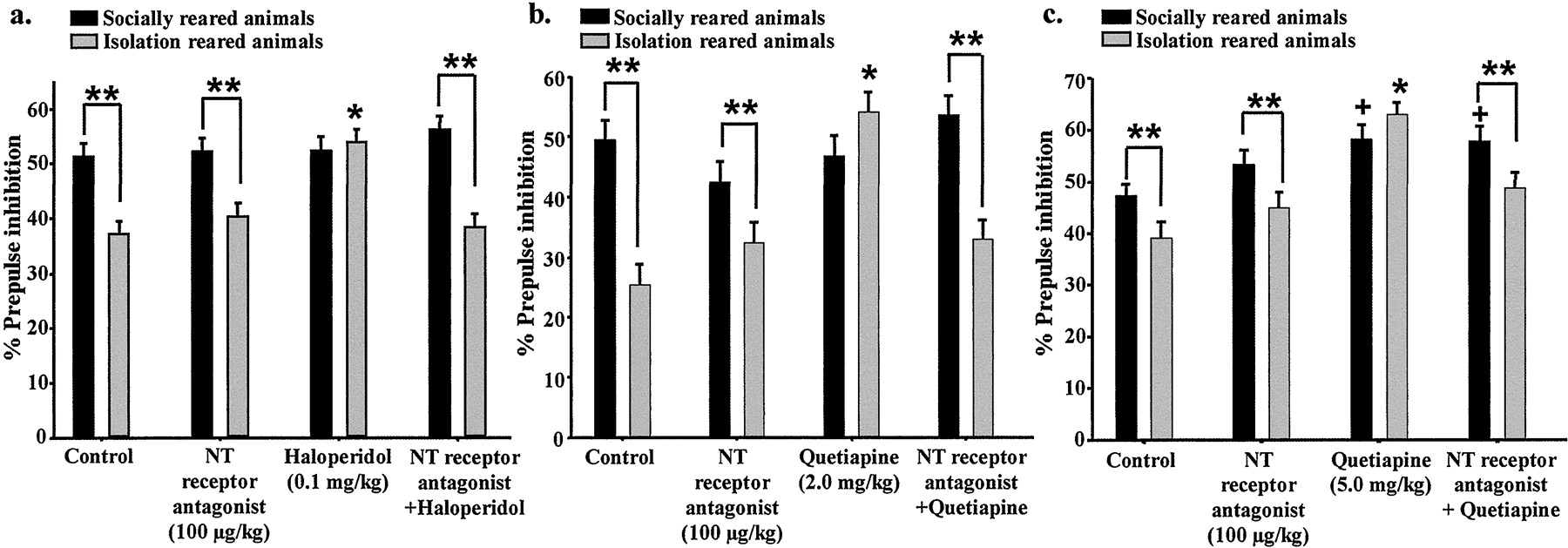
Effects of the NT receptor antagonist SR 142948A on restoration of PPI by haloperidol or quetiapine in isolation-reared animals. a–c, Data shown are percent PPI (data from three prepulse intensity levels combined) expressed as mean ± SEM. *p < 0.05 compared with socially reared animals within a treatment group. **p < 0.05 compared with control, NT receptor antagonist, and NT receptor antagonist plus haloperidol isolation-reared animals. +p < 0.05 compared with socially reared control animals. a, Effect of SR 142948A (0.1 mg/kg) on haloperidol (0.1 mg/kg)-induced restoration of PPI in isolation-reared rats (n = 10 or 11 females). b, Effect of SR 142948A on quetiapine (2.0 mg/kg)-induced restoration of PPI in isolation-reared animals (n = 8 or 9 females). c, Effect of SR 142948A on quetiapine (5.0 mg/kg)-induced restoration of PPI in isolation-reared animals (n = 7 or 8 females).


