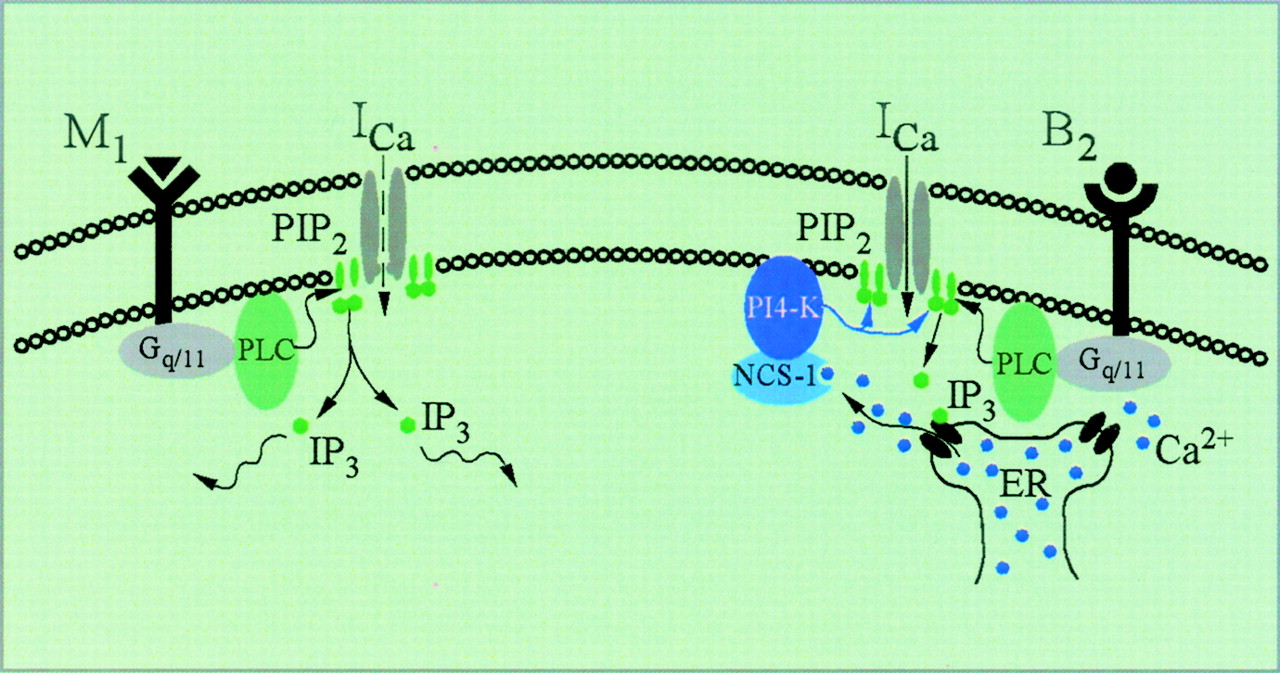
Schematic depiction of the signaling pathways using PIP2 signals suggested in this study. The signals provoked by M1 mACh (left) or bradykinin B2 (right) receptors are shown. ICa from N-type calcium channels is shown inhibited by muscarinic stimulation (left) but not normally inhibited by bradykinin (right). Both receptor types activate PLC via Gq/11, resulting in hydrolysis of PIP2. In the hypothesis of Delmas et al. (2004), clustering of B2 but not M1 receptors in the plasma membrane together with IP3 receptors in the endoplasmic reticulum (ER) causes the former, but not the latter, to release [Ca2+]i downstream of IP3 production. We suggest that the bradykinin-induced [Ca2+]i signals induce PIP2 synthesis, concurrent with its hydrolysis, via stimulation of PI4-kinase (PI4-K) by NCS-1, which acts as the sensor for increases in [Ca2+]i. Thus, bradykinin does not normally inhibit the N-type Ca2+ channel as a result of compensatory PIP2 synthesis, but muscarinic agonists do so robustly from consumption of PIP2.


