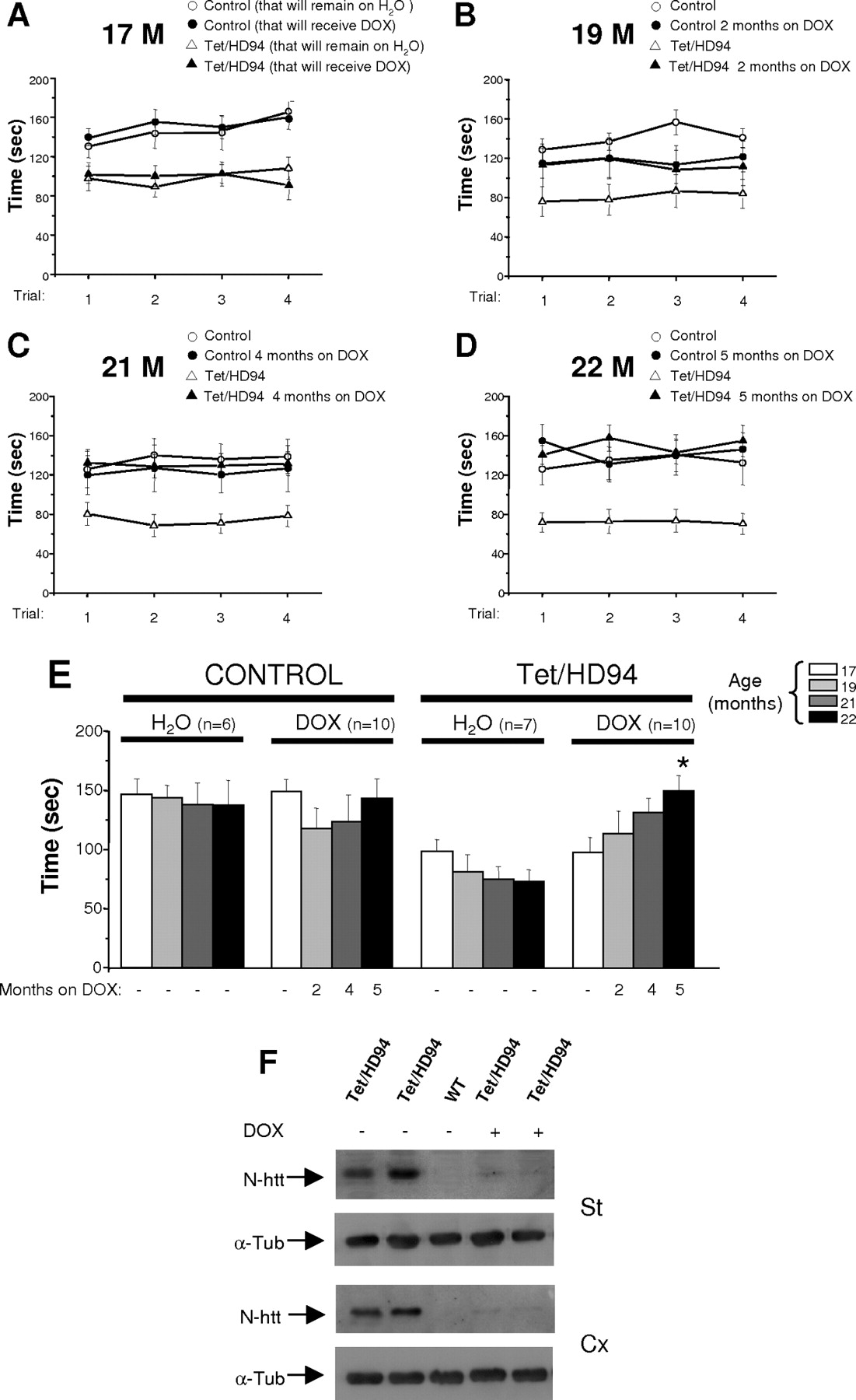
Silencing mutant-htt expression in Tet/HD94 mice with decreased striatal neurons results in full motor recovery. A-E, Rota-Rod performance of control or Tet/HD94 mice either receiving doxycycline to shut down transgene expression (DOX) or kept on water, from the age of 17 months to the age of 22 months. A-D, Values represent mean ± SEM time spent on Rota-Rod at the ages of 17 (A), 19 (B), 21 (C), and 22 (D) months. E, Mean ± SEM of the latencies to fall in the eight trials per genotype, age, and treatment condition. Motor performance of 22-month-old Tet/HD94 mice that have been on DOX for 5 months improve significantly with respect to their performance at the age of 17 months (*p < 0.01). F, Western blot analysis of striatal (St) and cortical (Cx) extracts from 22-month-old Tet/HD94 mice (+/- DOX treatment) and from control littermates probed with antibodies against N-terminal htt (CAG53b). Membranes were probed with anti-tubulin antibody to correct for any possible deviation on protein loading. M, Month; α-Tub, anti-tubulin; WT, wild type.


