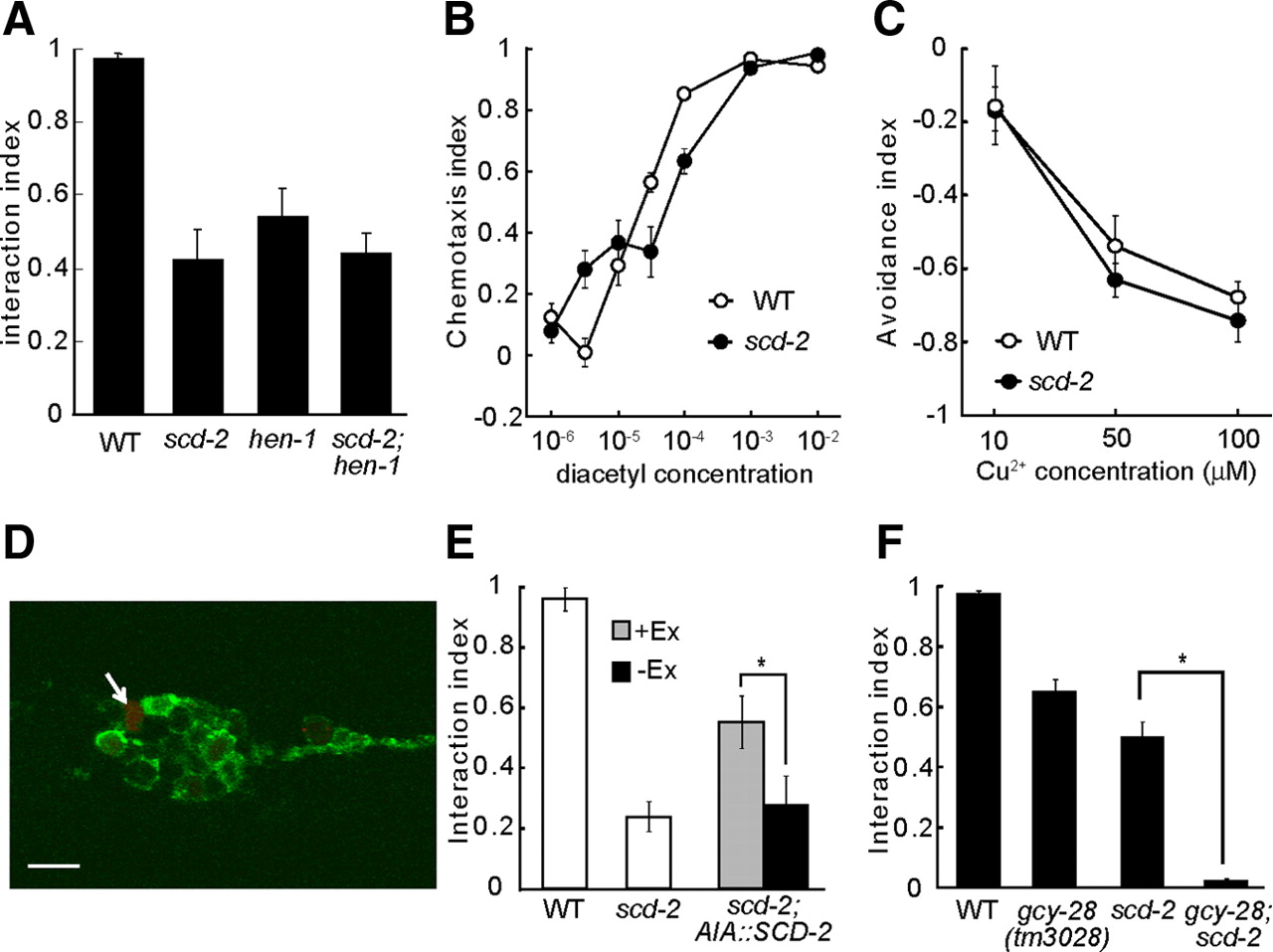
SCD-2 in AIA interneurons is important for the interaction of two sensory signals. A, The genetic interaction between hen-1 and scd-2 in the interaction assay. Error bars in A–C, E, and F indicate SEM. B, Chemotaxis toward various concentrations of diacetyl of scd-2 was analyzed by the conventional chemotaxis assay. C, Avoidance of various concentrations of Cu2+ of scd-2 was analyzed by the quadrant assay. D, Confocal view of wild-type animal expressing the functional scd-2::gfp fusion gene under the control of its own promoter at the adult stage. The colocalization of GFP with monomeric red fluorescent protein expressed in AIA by ins-1 promoter is indicated by arrows. Scale bar, 10 μm. E, The phenotype of scd-2 mutants expressing scd-2 cDNA by gcy-28.d promoter was analyzed by the interaction assay. Worms carrying the transgene (+Ex) and worms not carrying the transgene (−Ex) were compared. *p < 0.01. F, Analysis of gcy-28;scd-2 double mutants in the interaction assay. *p < 0.01. WT, Wild type.


