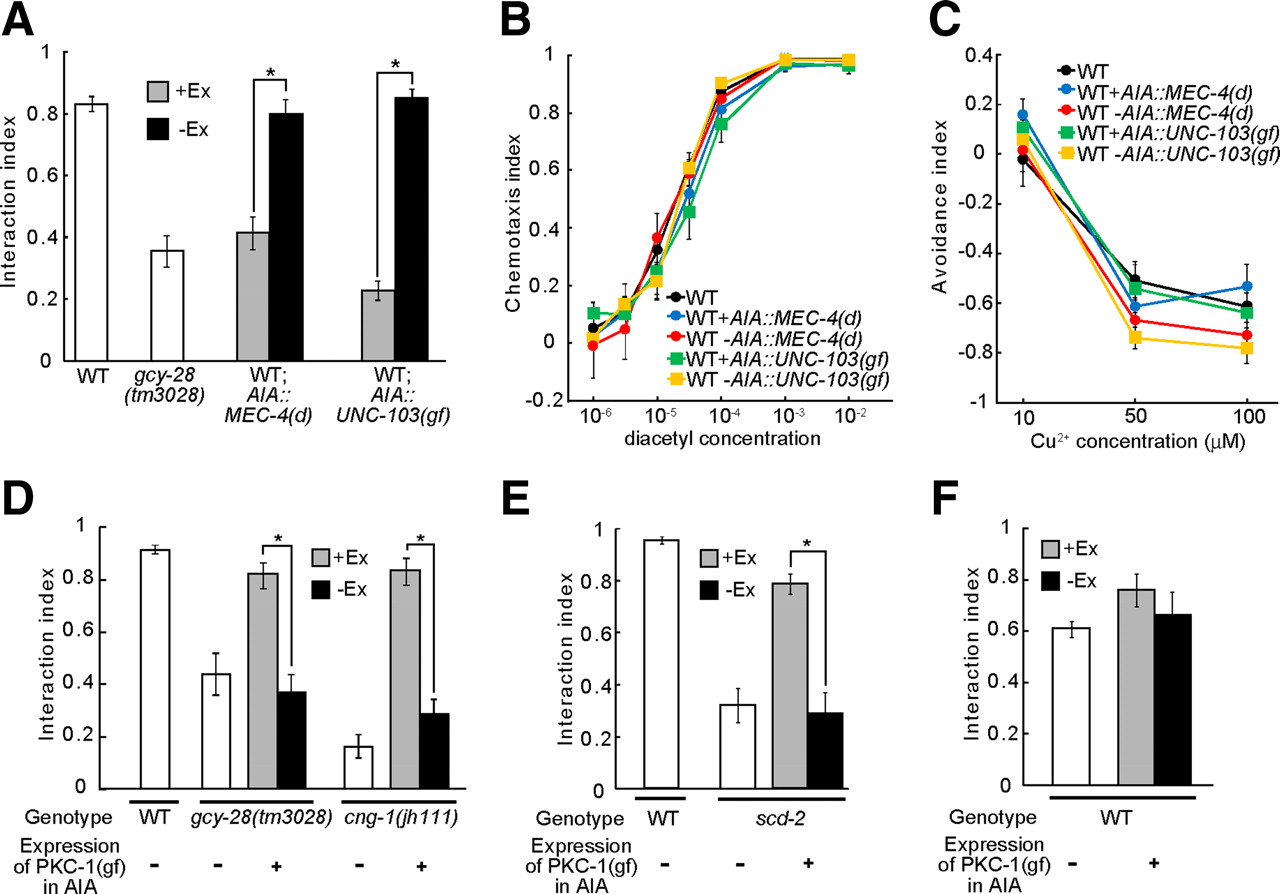
The AIA interneurons regulate sensory integration. A, The functions of AIA interneurons were inhibited by the expression of MEC-4(d) or constitutively active UNC-103 in wild-type animals; their behavior was analyzed in the interaction assay. B, Chemotaxis toward various concentrations of diacetyl of worms expressing MEC-4(d) or UNC-103(gf) in AIA was analyzed by the conventional chemotaxis assay. C, Avoidance of various concentrations of Cu2+ of worms expressing MEC-4(d) or UNC-103(gf) in AIA was analyzed by the quadrant assay. All points showed no significant differences from wild type (p > 0.01). D, E, The expression of constitutively active PKC-1 in AIA interneurons could rescue the defects of gcy-28 mutants, scd-2 mutants, and cng-1 mutants in the interaction assay. F, The effect of the expression of constitutively active PKC-1 in AIA interneurons on the phenotype of wild-type worms in the interaction assay (100 mm copper acetate was used as Cu2+ barrier). A–F, Worms carrying the transgene (+Ex) and worms not carrying the transgene (−Ex) were compared. Error bars in A–F indicate SEM. *p < 0.01. WT, Wild type.


