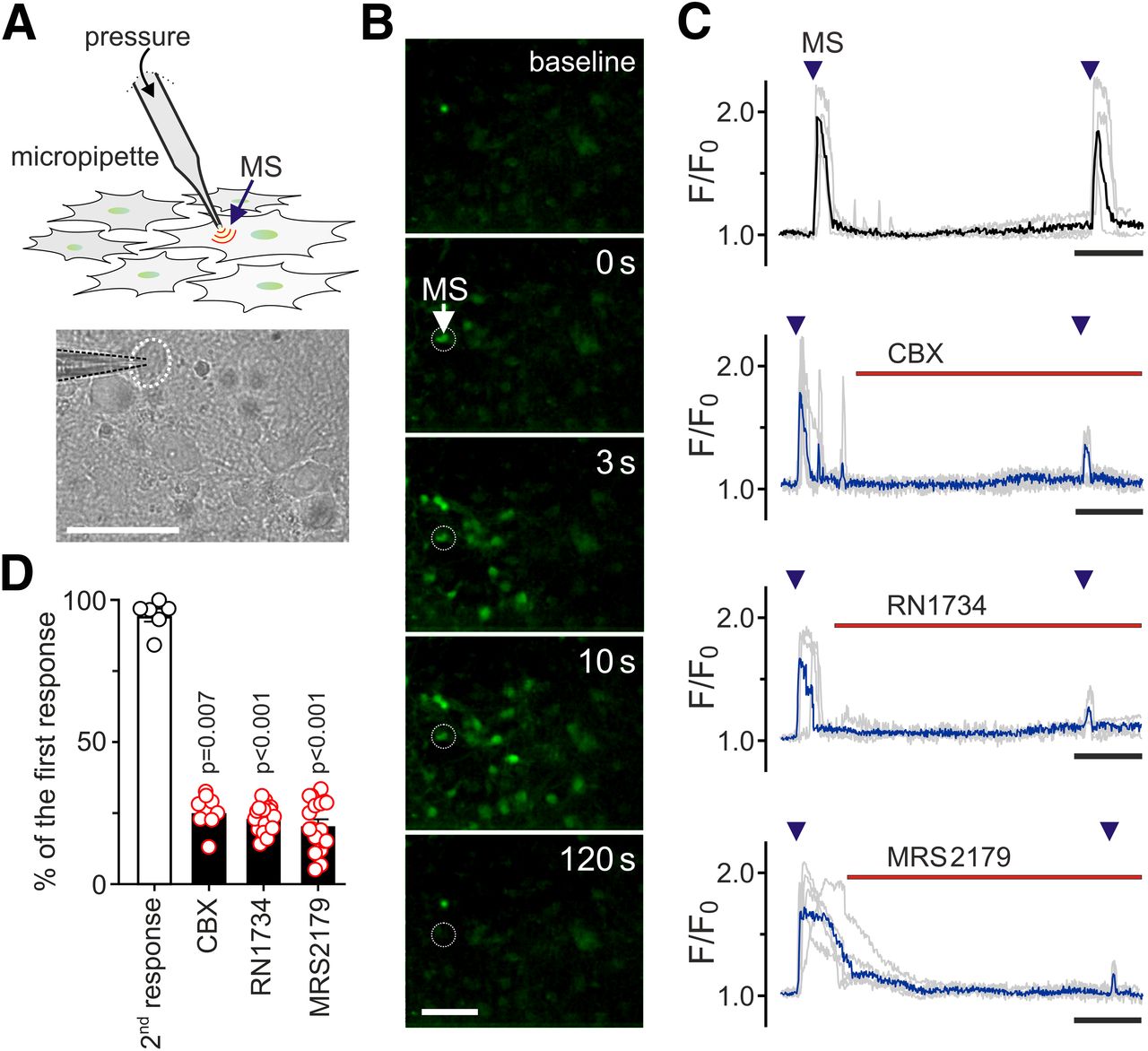
Mechanosensory Ca2+ responses in brainstem astrocytes. A, Controlled mechanical stimulation (MS) of an individual astrocyte in culture applied by timed ejections of extracellular media by pressurization of a patch pipette positioned within 20–100 µm from the cell membrane. Scale bar: 50 µm. B, Mechanical stimulation induced changes in fluorescence of Ca2+-sensitive genetically encoded sensor Case12 expressed in cultured astrocytes. Representative images were taken at baseline and at the indicated times after mechanical stimulation of the cell indicated by the arrow. Scale bar: 100 µm. C, Representative examples of mechanosensory [Ca2+]i responses recorded in brainstem astrocytes in the absence and presence of connexin/pannexin channel blocker CBX (100 μm), TRPV4 channel inhibitor RN1734 (10 μm), or P2Y1 receptor antagonist MRS2179 (3 μm). Traces depict individual (gray) and averaged (black/blue) changes in fluorescence of Ca2+-sensitive Case12, recorded in three to five individual astrocytes in the same number of separate cultures in a single experimental session. Time bars: 150 s. D, Summary data illustrating the effects of CBX, RN1734, and MRS2179 on mechanosensory Ca2+ responses in brainstem astrocytes. Data points show peak magnitude of the second [Ca2+]i response (expressed as the percentage of the first response) recorded in individual cells in separate cultures (n = 6–20); p values, Kruskal–Wallis ANOVA.


